Welcome
to Pro-Organic Belize
Tropical Garden Grow Guide
Where you are the student and the teacher
Tropical Garden Grow Guide
Where you are the student and the teacher
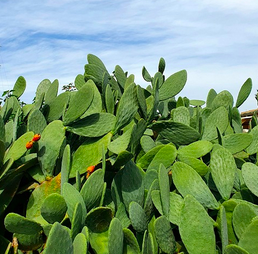
| Botanic name: |
Opuntia ficus-indica |
| Plant type: |
Vegetable pad, perennial |
| Sun exposure: |
Full sun 6-8 hrs |
| pH |
6-8 |
| Soil preference: |
Well-drained, sandy or rocky |
| Description |
Thick flat green pads |
April 2026 Plant of
the Month
Nopales (Prickly Pear)
Info gathered by Karin Westdyk
Nopales are the edible pads of the Opuntia ficus-indica commonly known as Prickly Pear. While traditionally associated with drier regions, they grow well in Belize when given good drainage and plenty of sunlight. For members of Pro-Organic Belize, nopales offer a low-input, highly nutritious crop that aligns beautifully with organic and regenerative practices.
Nopales are especially valuable in Belize’s changing climate. They are naturally drought-resistant, making them reliable during dry periods when other crops may struggle. At the same time, they require very few inputs—no chemical fertilizers or pesticides—yet provide a rich source of fiber, vitamins, and antioxidants. Beyond food, they contribute to soil health, help prevent erosion, and can serve as animal forage or even living fences. In this way, nopales support both household nutrition and ecological resilience.
Getting started with nopales is remarkably simple. Rather than planting seeds, most growers propagate them from a mature pad. A healthy pad is cut cleanly from the plant and then left in a shaded, airy place for five to ten days to dry and form a callus. This step is particularly important in Belize’s humid climate, as it helps prevent rot. Once dried, the pad is planted upright about two to three inches deep in well-draining soil, where it will quickly establish roots and begin producing new growth.
Providing the right growing conditions is key to success. Nopales thrive in full sun, ideally receiving six to eight hours of direct light each day. The most important factor is soil drainage. In areas with heavy or clay soils, it is helpful to amend the soil with sand, gravel, or a small amount of compost to improve structure. Raised beds or mounds can be especially useful in wetter regions, while sloped areas naturally help excess water drain away. After planting, only light watering is needed, and once established, nopales require very little additional water. Overwatering is the most common cause of failure and should be avoided.
Caring for nopales is straightforward and well suited to organic systems. Once established, the plants require little weeding, as they tend to ou-tcompete surrounding vegetation. Fertilization is generally unnecessary, though a light application of compost can be used if desired. Over time, removing older pads helps encourage the growth of new, tender pads that are ideal for eating. Pest problems are rare, though cochineal scale may occasionally appear as a white, fuzzy coating on the pads. This can be easily managed by brushing it off or spraying with water, without the need for chemical treatments.
Harvesting nopales is both simple and rewarding. The best pads to harvest are young and tender, typically about four to six inches long. Because of the spines, it is important to use gloves or tongs when handling them. Pads can be cut or gently twisted off at the joint. In the kitchen, nopales are highly versatile. They can be sautéed with onions, garlic, and eggs, added to stews, rice, or beans, sliced into fresh salads, or even blended into juices and smoothies for a mild, refreshing flavor.
In a regenerative context, nopales offer even greater value. Their root systems help stabilize soil and reduce erosion, particularly on slopes. They can be planted as living fences around gardens or farms, providing both protection and food. During dry periods, they can serve as an emergency forage for livestock. When integrated with other resilient crops such as cassava, chaya, and pigeon pea, nopales contribute to diverse, climate-smart systems that strengthen food security.
Ultimately, nopales represent more than just a crop. They are a practical, accessible solution for building resilience at the household and community level. Easy to grow, simple to share, and deeply nourishing, they are ideal for school gardens, community projects, and small farms throughout Belize. By promoting crops like nopales, Pro-Organic Belize continues to support a vision of healthy food, healthy soil, and thriving communities—grown in harmony with nature.
Before eating nopales, remove all spines by handling the pad with gloves or tongs. Trim the edges, then scrape both sides with a knife to remove the small spine bumps. Rinse well under running water, then slice as desired. To reduce the natural gel, boil briefly and rinse or cook with onion or lime.
Recipes
Nopales with Eggs (Huevos con Nopales)
This is one of the easiest and most traditional ways to enjoy nopales.
Ingredients:
Fresh nopales (cleaned and diced), eggs, onion, garlic, a little oil, salt, and pepper.
Instructions:
Start by lightly boiling or sautéing the diced nopales for about 10–15 minutes until tender and the sticky sap reduces. In a pan, sauté chopped onion and garlic in a bit of oil until fragrant. Add the cooked nopales and stir for a few minutes. Then pour in beaten eggs and cook gently, stirring until the eggs are set.
Fresh Nopales Salad (Ensalada de Nopales)
A refreshing dish ideal for warm climates like Belize.
Ingredients:
Cooked nopales (cooled), tomato, onion, fresh cilantro, lime juice, salt, and a drizzle of olive oil.
Instructions:
After boiling the nopales and rinsing off the sticky residue, let them cool. Mix with chopped tomatoes, finely sliced onion, and fresh cilantro. Add lime juice, a little olive oil, and salt to taste. Toss well and let sit for a few minutes before serving.
Nopales in Tomato Stew (Nopales Guisados)
A comforting, savory dish that pairs well with rice or tortillas.
Ingredients:
Fresh nopales (cleaned and diced), tomatoes (fresh or canned), onion, garlic, a bit of oil, salt, and optional chili or sweet pepper.
Instructions:
Cook the nopales first until tender. In another pan, sauté onion and garlic in oil, then add chopped tomatoes and cook until it forms a sauce. Add the nopales and simmer together for 10–15 minutes. Season with salt and optional chili for a little heat.
HomeNopales (Prickly Pear)
Info gathered by Karin Westdyk
Growing
Nopales Organically in Belize
A Practical Guide for Home Gardens, Schools & Small Farms
A Practical Guide for Home Gardens, Schools & Small Farms
Nopales are the edible pads of the Opuntia ficus-indica commonly known as Prickly Pear. While traditionally associated with drier regions, they grow well in Belize when given good drainage and plenty of sunlight. For members of Pro-Organic Belize, nopales offer a low-input, highly nutritious crop that aligns beautifully with organic and regenerative practices.
Nopales are especially valuable in Belize’s changing climate. They are naturally drought-resistant, making them reliable during dry periods when other crops may struggle. At the same time, they require very few inputs—no chemical fertilizers or pesticides—yet provide a rich source of fiber, vitamins, and antioxidants. Beyond food, they contribute to soil health, help prevent erosion, and can serve as animal forage or even living fences. In this way, nopales support both household nutrition and ecological resilience.
Getting started with nopales is remarkably simple. Rather than planting seeds, most growers propagate them from a mature pad. A healthy pad is cut cleanly from the plant and then left in a shaded, airy place for five to ten days to dry and form a callus. This step is particularly important in Belize’s humid climate, as it helps prevent rot. Once dried, the pad is planted upright about two to three inches deep in well-draining soil, where it will quickly establish roots and begin producing new growth.
Providing the right growing conditions is key to success. Nopales thrive in full sun, ideally receiving six to eight hours of direct light each day. The most important factor is soil drainage. In areas with heavy or clay soils, it is helpful to amend the soil with sand, gravel, or a small amount of compost to improve structure. Raised beds or mounds can be especially useful in wetter regions, while sloped areas naturally help excess water drain away. After planting, only light watering is needed, and once established, nopales require very little additional water. Overwatering is the most common cause of failure and should be avoided.
Caring for nopales is straightforward and well suited to organic systems. Once established, the plants require little weeding, as they tend to ou-tcompete surrounding vegetation. Fertilization is generally unnecessary, though a light application of compost can be used if desired. Over time, removing older pads helps encourage the growth of new, tender pads that are ideal for eating. Pest problems are rare, though cochineal scale may occasionally appear as a white, fuzzy coating on the pads. This can be easily managed by brushing it off or spraying with water, without the need for chemical treatments.
Harvesting nopales is both simple and rewarding. The best pads to harvest are young and tender, typically about four to six inches long. Because of the spines, it is important to use gloves or tongs when handling them. Pads can be cut or gently twisted off at the joint. In the kitchen, nopales are highly versatile. They can be sautéed with onions, garlic, and eggs, added to stews, rice, or beans, sliced into fresh salads, or even blended into juices and smoothies for a mild, refreshing flavor.
In a regenerative context, nopales offer even greater value. Their root systems help stabilize soil and reduce erosion, particularly on slopes. They can be planted as living fences around gardens or farms, providing both protection and food. During dry periods, they can serve as an emergency forage for livestock. When integrated with other resilient crops such as cassava, chaya, and pigeon pea, nopales contribute to diverse, climate-smart systems that strengthen food security.
Ultimately, nopales represent more than just a crop. They are a practical, accessible solution for building resilience at the household and community level. Easy to grow, simple to share, and deeply nourishing, they are ideal for school gardens, community projects, and small farms throughout Belize. By promoting crops like nopales, Pro-Organic Belize continues to support a vision of healthy food, healthy soil, and thriving communities—grown in harmony with nature.
Before eating nopales, remove all spines by handling the pad with gloves or tongs. Trim the edges, then scrape both sides with a knife to remove the small spine bumps. Rinse well under running water, then slice as desired. To reduce the natural gel, boil briefly and rinse or cook with onion or lime.
Recipes
Nopales with Eggs (Huevos con Nopales)
This is one of the easiest and most traditional ways to enjoy nopales.
Ingredients:
Fresh nopales (cleaned and diced), eggs, onion, garlic, a little oil, salt, and pepper.
Instructions:
Start by lightly boiling or sautéing the diced nopales for about 10–15 minutes until tender and the sticky sap reduces. In a pan, sauté chopped onion and garlic in a bit of oil until fragrant. Add the cooked nopales and stir for a few minutes. Then pour in beaten eggs and cook gently, stirring until the eggs are set.
Fresh Nopales Salad (Ensalada de Nopales)
A refreshing dish ideal for warm climates like Belize.
Ingredients:
Cooked nopales (cooled), tomato, onion, fresh cilantro, lime juice, salt, and a drizzle of olive oil.
Instructions:
After boiling the nopales and rinsing off the sticky residue, let them cool. Mix with chopped tomatoes, finely sliced onion, and fresh cilantro. Add lime juice, a little olive oil, and salt to taste. Toss well and let sit for a few minutes before serving.
Nopales in Tomato Stew (Nopales Guisados)
A comforting, savory dish that pairs well with rice or tortillas.
Ingredients:
Fresh nopales (cleaned and diced), tomatoes (fresh or canned), onion, garlic, a bit of oil, salt, and optional chili or sweet pepper.
Instructions:
Cook the nopales first until tender. In another pan, sauté onion and garlic in oil, then add chopped tomatoes and cook until it forms a sauce. Add the nopales and simmer together for 10–15 minutes. Season with salt and optional chili for a little heat.
Grow Guide Index