Welcome
to Pro-Organic Belize
Tropical Garden Grow Guide
Where you are the student and the teacher.
Tropical Garden Grow Guide
Where you are the student and the teacher.
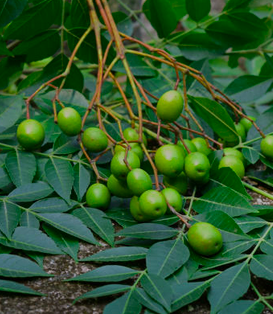
Leaves and ripe fruit
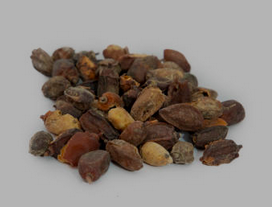
Seeds
| Botanic name: |
Azadirachta indica |
| Family |
Meliaceae |
| Plant type: |
Broadleaf evergreen tree |
| Sun exposure: |
Full sun but can tolerate shade but
grows more slowly |
| pH |
6.2-7 but can tolerate lower |
| Soil preference: |
Any type but well-drained |
| Lifespan |
200 years |
| Fruit bearing |
3-5 years |
| Height |
50-100 ft |
June 2026 Plant of the Month
Neem
By Karin Westdyk
The Latin name for neem
is Azadirachta indica, which literally means “Free
Tree of India,” where it has been revered for
centuries because of its many agricultural and
medicinal properties. Neem is a botanical cousin of
mahogany, belonging to the Meliaceae family, and like
mahogany, neem trees thrive in Belize and can live
between 150 and 200 years.
From seeds, neem trees grow slowly during their first year and then bolts, reaching heights of 50–100 feet within three to five years. At that point, they begin to bear fruit. Neem timber, like mahogany, is naturally termite-resistant but can be harvested after only five to seven years.
Requiring little water but plenty of sunshine, neem trees grow in almost any type of soil, including heavy clay soils. With a taproot that can extend to twice the height of the tree, neem provides shade while naturally repelling insects. Some say the perfect place to hang a hammock is between two neem trees.
Agriculturally, neem produces a highly effective and safe organic fertilizer. More importantly, oil extracted from the seeds yields a natural insecticide that affects approximately 200 insect species, many of which are difficult to control with conventional pesticides. At a time when we are increasingly seeing the negative effects of chemical fertilizers and pesticides, neem offers a sustainable alternative.
Neem cake—the residue left after oil extraction from crushed neem seed kernels—helps control soil nematodes while enriching the soil. Rich in nitrogen, phosphorus, and potassium (N-P-K), neem cake slowly releases nutrients, aerates the soil, promotes healthy plant growth, and strengthens plant resistance to pests and disease. Earthworm populations have often been observed to increase in soils where neem cake has been applied.
Agricultural chemicals are becoming increasingly expensive, crippling many small farmers and cutting into their profits. The need for stronger and more powerful pesticides each year is another growing concern. Chemical pesticides often destroy beneficial insects along with harmful ones, while the strongest and most destructive pests survive to produce even more resistant generations.
Neem works differently from chemical pesticides. It is not an instant “kill-everything” solution, nor does it harm beneficial insects. Instead, it targets the chewing and sucking insects that damage crops by disrupting several stages of their life cycle. When neem enters the body of an insect larva, it prevents feeding and molting, eventually causing death. If the concentration is not sufficient to kill the insect at the larval stage, it may survive into the pupal stage but will die before reaching maturity. Even if it reaches adulthood, the insect is often malformed and incapable of reproduction. Because insects stop feeding on neem-treated plants and are unable to reproduce successfully, populations decline dramatically. Some plants even absorb neem systemically, effectively becoming protected against feeding insects.
A simple experiment involving two jars, each containing a leaf and a grasshopper, illustrates how neem works. One leaf is sprayed with a chemical insecticide, the other with neem. The grasshopper in the first jar eats the chemically treated leaf and dies almost immediately. The grasshopper in the second jar refuses to eat the neem-treated leaf and eventually starves. Which is preferable—a half-eaten, chemically contaminated cabbage, or one that is whole, organic, and safe to eat?
Neem leaves are used in many consumer products, including toothpaste, mouthwash, soaps, shampoos, and numerous medicinal preparations. A tea from the leaves can also be used on plants as an insecticide. However oil extracted from the seed is more powerful. Seeds are harvested during the summer months in Belize. They are encased in a green fleshy outer coating that birds love to eat, so the seeds are often found on the ground without the covering and should be planted within a short period of time as they quickly lose their ability to germinate.
In Africa, neem is known as the 'tree of many cures'. In India, it is often referred to as “the village pharmacy” and has been used for nearly 5,000 years to treat a wide variety of ailments. Every part of the tree has medicinal value: It is antifungal and antibacterial (fights E.coli, Staphylococcus aureus); antimicrobial (kills bacteria, viruses, fungi, parasites); anti-inflammatory (reduces pain and swelling); antioxident (protects against UV rays, pollution, aging); antiseptic (heals wounds without scarring, prevents infection); and anti-parasitic (treats head lice, intestinal worms, ticks, fleas). Neem possesses anti-malarial, and antichagas properties and has even been used in the treatment of poisonous bites. Neem has been reported to help lower blood sugar levels in diabetics, reduce cholesterol, lower blood pressure, and support cardiovascular health. It is also valued as a blood purifier and detoxifier.
Research on neem continues worldwide. Promising results have been reported in studies investigating its potential role in the prevention and treatment of certain cancers and immune-related diseases. Neem has also been used for centuries by women as a natural contraceptive, and research has explored its potential use in male contraceptive products.
Neem is equally valuable for pets and farm animals. A spray is commonly used to help repel ticks and fleas and to treat conditions such as mange in dogs.
In 1992, the U.S. National Research Council's Board on Science and Technology for International Development released a report entitled "Neem: A Tree for Solving Global Problems".. The report described neem as one of the most promising plants on Earth and suggested that it could eventually benefit every person on the planet. The report stated: “Probably no other plant yields as many strange and varied products or has as many exploitable by-products as neem.”
Neem oil is available at some agricultural supply stores in Belize, including Prosser’s in Belmopan. Neem trees can be purchased from several Belizean nurseries, including those at Central Farm and DuPlooy’s. (When growing from seed, remember to plant soon after harvesting.)
Warning: pregnant and breastfeeding women, infants and young children, and people trying to conceive should not consume neem. Neem can also interact with some prescription drugs. Always exercise caution and carefully research side effects with both plant and allopathic medicines.
From seeds, neem trees grow slowly during their first year and then bolts, reaching heights of 50–100 feet within three to five years. At that point, they begin to bear fruit. Neem timber, like mahogany, is naturally termite-resistant but can be harvested after only five to seven years.
Requiring little water but plenty of sunshine, neem trees grow in almost any type of soil, including heavy clay soils. With a taproot that can extend to twice the height of the tree, neem provides shade while naturally repelling insects. Some say the perfect place to hang a hammock is between two neem trees.
Agriculturally, neem produces a highly effective and safe organic fertilizer. More importantly, oil extracted from the seeds yields a natural insecticide that affects approximately 200 insect species, many of which are difficult to control with conventional pesticides. At a time when we are increasingly seeing the negative effects of chemical fertilizers and pesticides, neem offers a sustainable alternative.
Neem cake—the residue left after oil extraction from crushed neem seed kernels—helps control soil nematodes while enriching the soil. Rich in nitrogen, phosphorus, and potassium (N-P-K), neem cake slowly releases nutrients, aerates the soil, promotes healthy plant growth, and strengthens plant resistance to pests and disease. Earthworm populations have often been observed to increase in soils where neem cake has been applied.
Agricultural chemicals are becoming increasingly expensive, crippling many small farmers and cutting into their profits. The need for stronger and more powerful pesticides each year is another growing concern. Chemical pesticides often destroy beneficial insects along with harmful ones, while the strongest and most destructive pests survive to produce even more resistant generations.
Neem works differently from chemical pesticides. It is not an instant “kill-everything” solution, nor does it harm beneficial insects. Instead, it targets the chewing and sucking insects that damage crops by disrupting several stages of their life cycle. When neem enters the body of an insect larva, it prevents feeding and molting, eventually causing death. If the concentration is not sufficient to kill the insect at the larval stage, it may survive into the pupal stage but will die before reaching maturity. Even if it reaches adulthood, the insect is often malformed and incapable of reproduction. Because insects stop feeding on neem-treated plants and are unable to reproduce successfully, populations decline dramatically. Some plants even absorb neem systemically, effectively becoming protected against feeding insects.
A simple experiment involving two jars, each containing a leaf and a grasshopper, illustrates how neem works. One leaf is sprayed with a chemical insecticide, the other with neem. The grasshopper in the first jar eats the chemically treated leaf and dies almost immediately. The grasshopper in the second jar refuses to eat the neem-treated leaf and eventually starves. Which is preferable—a half-eaten, chemically contaminated cabbage, or one that is whole, organic, and safe to eat?
Neem leaves are used in many consumer products, including toothpaste, mouthwash, soaps, shampoos, and numerous medicinal preparations. A tea from the leaves can also be used on plants as an insecticide. However oil extracted from the seed is more powerful. Seeds are harvested during the summer months in Belize. They are encased in a green fleshy outer coating that birds love to eat, so the seeds are often found on the ground without the covering and should be planted within a short period of time as they quickly lose their ability to germinate.
In Africa, neem is known as the 'tree of many cures'. In India, it is often referred to as “the village pharmacy” and has been used for nearly 5,000 years to treat a wide variety of ailments. Every part of the tree has medicinal value: It is antifungal and antibacterial (fights E.coli, Staphylococcus aureus); antimicrobial (kills bacteria, viruses, fungi, parasites); anti-inflammatory (reduces pain and swelling); antioxident (protects against UV rays, pollution, aging); antiseptic (heals wounds without scarring, prevents infection); and anti-parasitic (treats head lice, intestinal worms, ticks, fleas). Neem possesses anti-malarial, and antichagas properties and has even been used in the treatment of poisonous bites. Neem has been reported to help lower blood sugar levels in diabetics, reduce cholesterol, lower blood pressure, and support cardiovascular health. It is also valued as a blood purifier and detoxifier.
Research on neem continues worldwide. Promising results have been reported in studies investigating its potential role in the prevention and treatment of certain cancers and immune-related diseases. Neem has also been used for centuries by women as a natural contraceptive, and research has explored its potential use in male contraceptive products.
Neem is equally valuable for pets and farm animals. A spray is commonly used to help repel ticks and fleas and to treat conditions such as mange in dogs.
In 1992, the U.S. National Research Council's Board on Science and Technology for International Development released a report entitled "Neem: A Tree for Solving Global Problems".. The report described neem as one of the most promising plants on Earth and suggested that it could eventually benefit every person on the planet. The report stated: “Probably no other plant yields as many strange and varied products or has as many exploitable by-products as neem.”
Neem oil is available at some agricultural supply stores in Belize, including Prosser’s in Belmopan. Neem trees can be purchased from several Belizean nurseries, including those at Central Farm and DuPlooy’s. (When growing from seed, remember to plant soon after harvesting.)
Warning: pregnant and breastfeeding women, infants and young children, and people trying to conceive should not consume neem. Neem can also interact with some prescription drugs. Always exercise caution and carefully research side effects with both plant and allopathic medicines.