Tropical Garden Grow Guide
Where you are the student and the teacher
January 2026 Plant of the Month
| Botanic name: |
Pachyrhizus erosus |
| Family: |
Fabaceae |
| Plant type: |
Tropical legume |
| Sun exposure: |
Full sun, 6-8 hours a day |
| pH |
6.5-8 |
| Soil preference: |
loose, sandy and sandy loam,
well-drained |
| Description |
Vining legume with edible undergrount
tuberous roots |
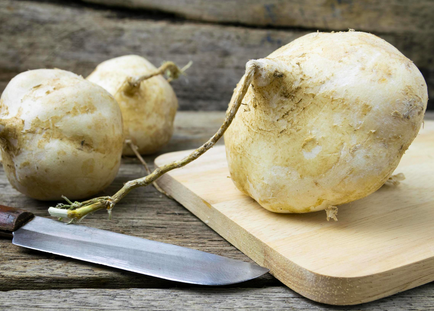
JICAMA
by Mary Loan
Jicama, (pronounced
he-cama), botanic name Pachyrhizus erosus, is
a herbaceous perennial vine that is usually grown as
an annual for its tubers. Evidence of the plant has
been discovered at archaeological sites in Peru
dating back to 3000 B.C.! The origin
of jicama is believed to be Mexico.
Cultivation is now
world-wide in tropical climates, especially in Meso
American and Asian countries.
Jicama is
propagated by seeds or tuber cuttings. The leaves, pods
and seeds are all toxic as they contain rotenone, a
natural insecticide.
The tubers of the plant are not toxic. The thin brown
skin is peeled before eating.
Dawn Dean, author
of Gardening in Southern Belize advises
that seeds can be planted “anytime” in full sun in
loose, aerated soil that is high in potassium with a
pH of 6.5 -8.0. It is recommended to soak the seeds
for about 8 hours before planting to aid their
growth. Seeds are then planted about 1 inch deep
spaced about 10-12” apart in rows about 24” apart. Potassium
can be added to the soil in the form of chopped up
banana peels soaked in water for a day.
The vigorous vines
need support as they may grow up to 15 – 20 feet in
height. Growers
often prune them to 5 feet to encourage growth of
the tubers. The
vines produce blue and white flowers that produce
seeds. Removing
the flowers help the tubers to grow larger as the
tubers grow beneath the earth. Tubers
vary in size from 2” to 2' across. The
smaller ones are more tender and juicy than large
ones. It
is important to keep the plants watered, but not
allow the soil to become soggy. Due to the
high level of rotenone contained in the leaves,
flowers and seeds, jicama is seldom bothered by
insects.
Jicama grown from
seed and takes approximately 120-150 days to
harvest. The tubers are said to be best when they
are approximately 3-6” in diameter. The
larger plants can lose their tenderness and become
tough and 'woody'. Each plant typically produces
one or more tubers. It is recommended to cure the
tubers 1-2 days in the shade before consuming or
selling them.
There are many
descriptions of the taste and texture of the white
interior of jicama: slightly sweet; crunchy;
mildly nutty; similar to a water chestnut, a crisp
pear or apple; a dense melon. It is a delicate
tasting ingredient to include in sweet or savory
dishes. Jicamas are composed of 90% water and are
generally eaten raw in salads and fruit plates
though they may be served roasted, stir or air
fried.
The many health
benefits of jicama include its high content of
vitamin C and choline as well as its content of
copper, iron, potassium phosphorous and zinc. One cup
of cut up jicama contains about 46 calories.
Jicama is delicious
and refreshing cut into sticks and eaten as a snack
or addition to a vegetable or fruit salad. The
Mexican style recipe adds a squeeze of fresh lime
juice, a little chili powder and salt. The cut up
sticks may be parboiled then drained, sprinkled with
garlic and/or onion powder and paprika, and baked in
the oven on a greased cookie sheet to become low
calorie, low starch French fries. There are
many other recipes on-line. Enjoy!