Tropical Garden Grow Guide
Where you are the student and the teacher
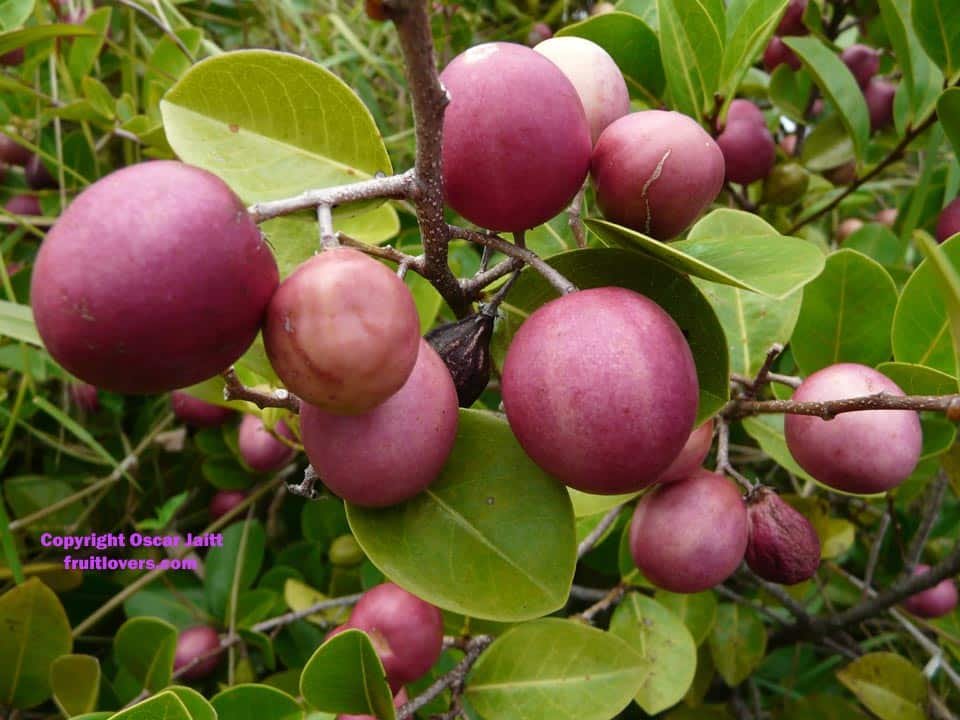
| Botanic name: |
Chrysobalanus icaco |
| Family |
Chrysobalanaceae |
| Plant type: |
evergreen shrub |
| Sun exposure: |
full sun |
| pH |
6.6-8.4 |
| Soil preference: |
well-drained, many soils between acid
and alkaline, salt tolerant |
| Spacing |
3-5 ft. apart as fence, 10 ft. as
bush |
| Fruit bearing |
from seed: 3-5 yrs.; from cuttings:
2-3 yrs. |
| Height |
5-15 ft. |
Cocoplum
By Mary Loan
Cocoplums
are
evergreen shrubs that grow to become small bushy
trees with glossy green
leaves. The
wood is hard and is used in
construction.
The shrubs are often used
as privacy fences or wind blocks. The
bushes are rugged and thrive in tropical coastal
To
plant
a cocoplum in your yard you do not have to live
near the ocean.
A sunny well drained location will do. They are
tolerant to all kinds of soils,
preferably pH 6.6-8.4. They are seldom bothered by
insects and diseases. (However,
the one in our orchard has declined
in the past 5 years and a worm or two found their
way into the fruit.) Dig a
hole twice as wide as the root ball preferably
during mild weather to give the
plant a chance to grow. Space
the plants
3 to 5 feet apart for creating a fence or up to 10
feet apart for individual
bushes.
The
nutritional
profile of cocoplums includes vitamins A, C and K,
antioxidants and
fiber. The
bark has been used to create
a black dye and has been used shaved from the tree
and boiled as a tea to be
used to stem diarrhea. The
edible kernel
contains s sweet healthy fat.
Cocoplums
are
enjoyed picked fresh from the tree, including the
tasty edible sweet kernel
that may be eaten raw or roasted. The
fruits are often stewed with sweetener and/or made
into jelly or jam,
especially the darker fruits.
If
you
are looking for a rugged bush or specimen for your
yard that requires
little care ask around for a nursery that
propagates by stem cuttings rather
than grown from seed