Tropical Garden Grow Guide
Where you are the student and the teacher.
| Botanic
name: |
Sechium edule |
| Other Name: |
Cho-Cho, wiskill |
| Family: |
Cucurbitaceae,
Gourd Family |
| Plant type: |
Perennial Vine |
| Sun exposure: |
Full Sun |
| pH |
6-7 |
| Soil preference: |
Well drained, loamy to sandy |
| Description |
Can grow 10 meters long. Needs
support and frequent pruning. |
June 2025 Plant of the Month
Chayote (locally known as cho-cho)
By Karin Westdyk, Mary Loan, and Dottie Feucht
Chayote Squash: A Versatile and Nutritious Gourd
Chayote squash, known scientifically as Sechium edule and commonly referred to as chocho or wiskill in Belize, is a popular member of the Cucurbitaceae family. This versatile plant is widely grown in Belize and other tropical regions worldwide, with its origins tracing back to Mesoamerica. Cultivated by the Maya for centuries, chayote is botanically classified as a fruit but is often treated as a vegetable in culinary contexts.
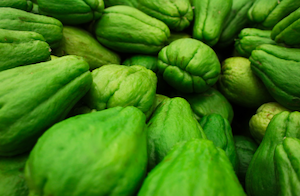
The chayote plant produces pear-shaped squash, typically measuring 3 to 7 inches long, with light green, slightly bumpy skin. Each squash contains a large white seed that resembles a tongue, sprouting from the wide bottom 3-4 weeks after harvest. The sprouted chayote can either be eaten or used to plant more. The flesh is whitish to pale green, featuring a crunchy, slightly sweet texture, and a mild taste. Chayote is edible in all its forms, including the flowers, leaves, seeds, and squash itself.
Growing Chayote
To successfully grow
chayote in your garden, find a location that
receives full sun and has well-drained, rich soil
with a slightly acidic pH of 5-6. Plant the whole,
sprouted squash horizontally, spacing them about 7
to 10 feet apart, and ensure plenty of support, like
a sturdy trellis or fence, as the vines can reach
over 30 feet in length. Chayote typically yields
squash 30 to 60 days after flowering and can be
harvested about 4-5 months after planting. Chayote
can be planted anytime the weather is consistently
warm; in Belize that usually means March to October.
Chayote plants can produce around 30 chayotes in their first year, increasing to 60-80 in subsequent years. However, it’s best to replant every three years to mitigate diseases. Some common pests include cucumber beetles, squash bugs, aphids, and spider mites, which can be managed with diluted neem oil spray or insecticidal soap.
Nutritional Benefits
Chayote has an impressive nutritional profile, rich in folate, fiber, vitamins B6, C, K, calcium, and iron. It is both heart-healthy and diabetic-friendly. The plant also contains bioactive compounds like flavonoids and antioxidants that may provide various health benefits, including support for managing type 2 diabetes, lowering cholesterol and blood pressure, and having potential anti-cancer effects.
Cooking with Chayote
Chayote is highly versatile and can be enjoyed raw in salads or cooked in an array of dishes, including soups, stews, and stir-fries. Here are some delicious recipes to try:
Chayote Stir Fry:
- 2 tablespoons oil
- 2 medium chayote squash, sliced into thin wedges
- 1 small onion, diced
- 2 cloves garlic, minced
- Salt and pepper to taste
- Water as needed
Heat oil in a frying pan over low to medium heat. Add the chayote and onion, stirring and adding water gradually to prevent sticking. After 5 minutes, add garlic and seasoning.
Stuffed Chayote:
- 6 chayotes
- 1 tablespoon salted butter
- 1 large or 2 small white onions, finely chopped
- 2 whisked eggs
- 1 cup shredded parmesan cheese
- Salt to taste
Preheat oven to 350°F (175°C). Boil chayotes for 10-15 minutes until tender. Gently scoop out the insides and mash. Sauté onions in butter, combine with the mashed filling and whisked eggs, then refill the shells with mixture, topping with parmesan cheese. Bake for approximately 30 minutes until golden.
Chayote Cucumber Salad:
- 2 chayotes
- 1 large cucumber
- 1 red onion
- Oregano flakes, onion powder, garlic powder, fresh cilantro
- Lime juice, cayenne powder, and salt
Peel and slice the
chayotes and cucumber. Combine with thinly sliced
onion and cilantro, adding seasonings and lime juice
to taste.
Chayote
Pie (contributed
by Dottie Feucht)
Chayote can be used as an apple substitute in apple pie by cooking the chayote in apple juice. When the chayote is soft stir in the same spices: cinnamon, nutmeg and sugar and 3 tablespoons of cornstarch or tapioca as you would for an apple pie and cool a bit before pouring it into an unbaked pie crust. Bake the same as for apple pie.
Chayote squash's
adaptability in culinary applications and its
significant health benefits make it an excellent
addition to a balanced diet.